null

RESEARCH AREA AND TRANSLATIONAL RESEARCH

ROLE OF SENESCENCE IN CARDIOVASCULAR DISEASES

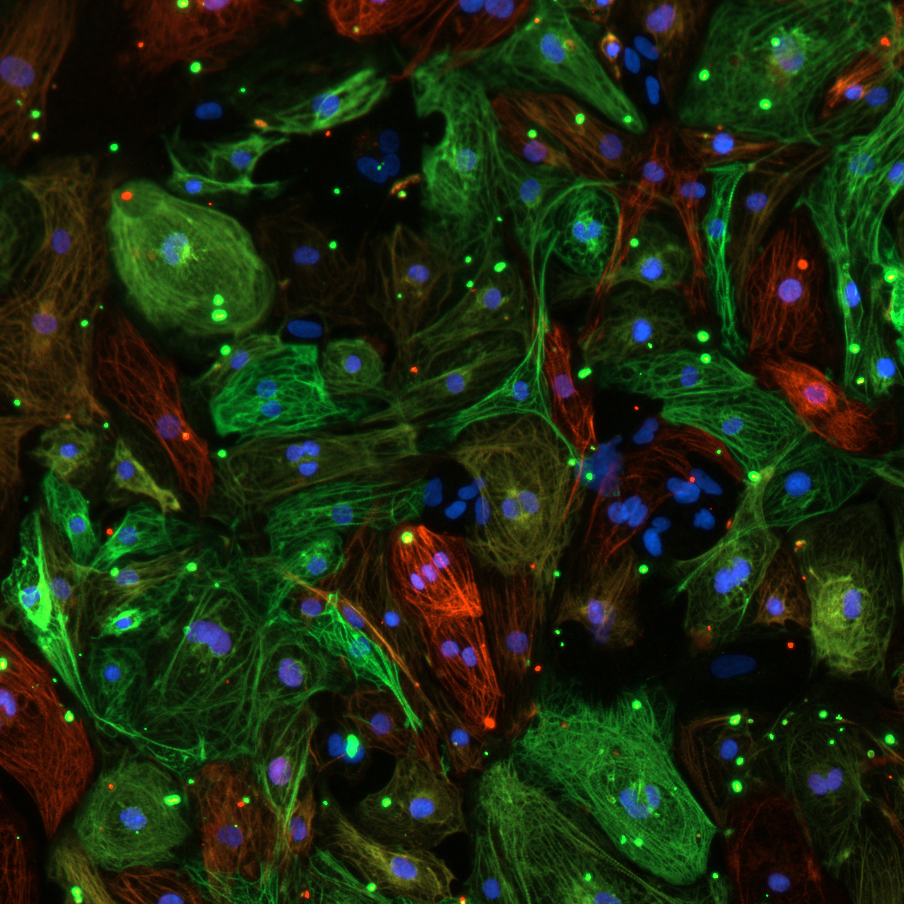
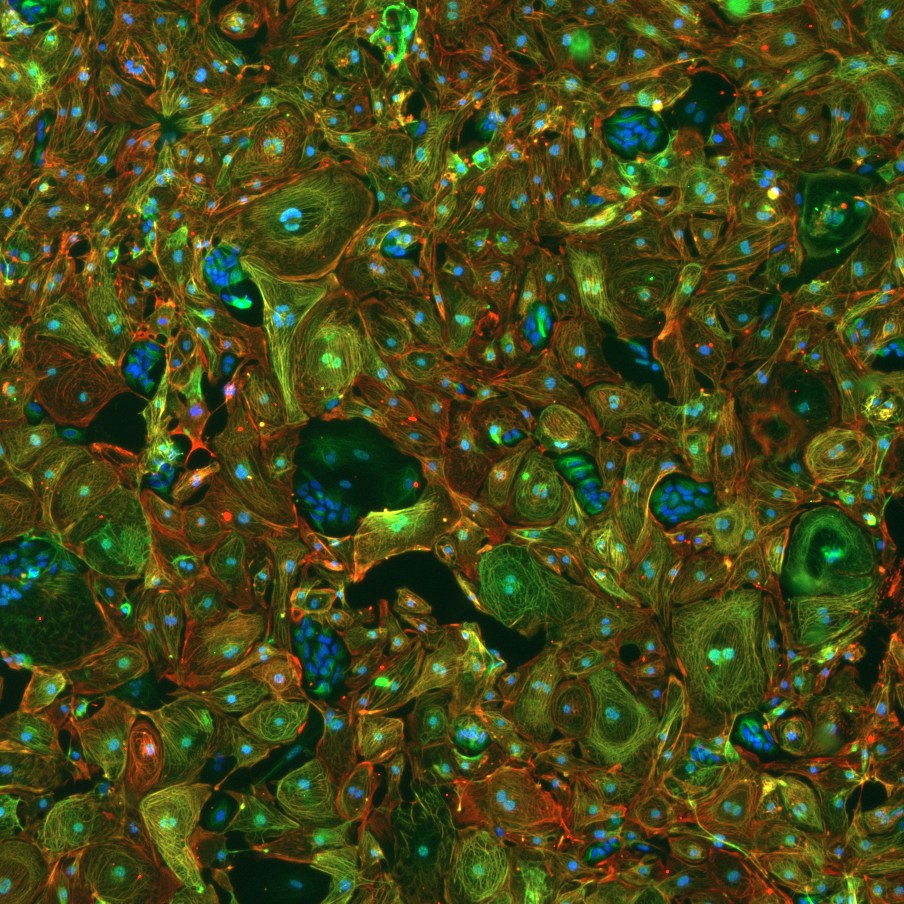
In vitro model of senescence in human cardiomyocytes: LCT is active in studying the role of senescence in cardiovascular diseases. In particular, an in vitro model of premature senescence in human cardiomyocytes (functional cardiac cells) was developed using the Induced Pluripotent Stem Cells (iPS) technology. This model is a unique platform for the study of cellular mechanisms lying behind senescence-associated cardiac disease in human. The platform will be the basis of an important study aiming to evaluate the susceptibility of senescent cardiomyocytes to SARS-CoV-2.

In-vivo stress-induced senescence: The role of senescence is also studied in-vivo in animal model of myocardial infarction. The acute ischemic event induces the formation of fibrotic tissue and the accumulation of senescent cells that release factors that can alter the functionality of heart cells. This may contribute to exacerbate the necrosis process resulting from the acute ischemic event. We aim to studying possible “senolytic” and/or “senostatic” approaches to ameliorate senescence-associated damage in the heart.


EXOSOMES AND EXTRACELLULAR VESICLES AS LIQUID BIOPSY

EV as Biomarkers. Recently, the LCT laboratory has completed a series of studies performing molecular analysis of the biofluid-derived extracellular vesicles (EV). We profiled surface protein and membrane lipids of plasma and serum-derived EV. The EV-based diagnostic test standardized at LCT laboratory has been evaluated as diagnostic tool in acute cardiac rejection following heart transplantation to discriminate different types of rejection as well as for prognosis of severity of rejection. We recently evaluated the lipid composition of circulating EVs and their diagnostic potential after myocardial ischemia. Very recently we used the profiling of EV as prognostic tool for predicting severity in COVID-19 patients. Role of EV as Mediators of Inflammation. The laboratory has made important advances in research studying the role of circulating EVs resulting from the inflammatory process following an acute ischemic event of the myocardium. We proved that inflammatory EV secreted by polarized macrophages carrying inflammatory cytokine such as IL-1α, IL-1β e have direct cytotoxic effects on heart cells.

RESEARCH METHODS

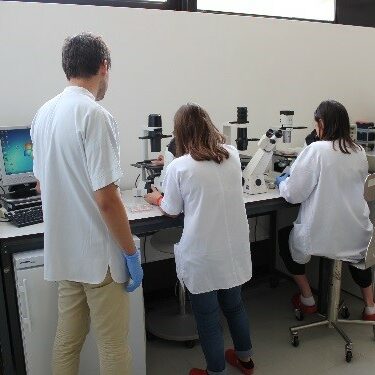
The LCT lab has set up a laboratory for experimental cardiology including in-vitro, ex-vivo and in-vivo methods: In-vitro we standardized specific cell culture protocols for isolation of primary cardiomyocytes from murine and rat hearts. We have established the technology of human induced pluripotent stem cells (iPS) to derive and culture in vitro cardiomyocytes to be used as “human-based” platform for modelling cardiac diseases. We are able to isolate and characterize EV from conditioned medium of in vitro cultured cells and from biological fluids. In this field, we use various cutting-edge techniques including size-exclusion chromatography, density gradient, immunoaffinity etc. Ex-vivo, we have standardized method for culture of heart in a Langendorff system for functional evaluation of heart function in an “ectopic” setup. In-vivo, we are able to perform model of myocardial infarction with permanent ligation of coronary as well as model of ischemia reperfusion. We have setup a model of cardiotoxicity induced by anti-cancer drugs using subacute injection of doxorubicin.

GROUP LEADER
null

Lucio Barile

BRIEF CV

Lucio Barile is group leader of the Laboratory for Cardiovascular Theranostics at Istituto Cardiocentro Ticino (ICCT), Ente Ospedaliero Cantonale. He holds a master degree in Pharmacy and PhD in Experimental Medicine from the University of Rome “La Sapienza”, Rome, Italy. He spent two years as visiting PhD Student at Institute of Molecular Cardiobiology, Johns Hopkins University, Baltimore, USA. He was part of a research team that developed a method for the isolation of adult human cardiac progenitor cells (CPC). During this period he was awarded by the America Heart Association with “Young Investigator Award 2005”. Barile worked as PostDoc in the Department of Molecular Medicine at ICGEB Trieste-Component, and he was Research Scientist from 2009 to 2011 at Department of Biotechnology, University of Milano-Bicocca, Milan, Italy. He moved to ICCT in 2011 as senior scientist. At ICCT he established a research topic of secreted extracellular vesicles resulting in a publications among the very first reports on such topic. He is currently Swiss Member of EU-CARDIOPROTECTION COST Action, which is a pan-European research network aiming to improve the clinical translation of novel cardioprotective approaches. Barile is part of the working group on Cardiovascular Regenerative & Reparative Medicine of the European Society of Cardiology. Since May 2020, he is Affiliate Professor at Institute of Life Science, Scuola Superiore Sant’Anna, Pisa, Italy. Since December 2021 he has been appointed as Adjunct Professor by Università della Svizzera italiana (USI), he is currently faculty member of the PhD Scientific Committee for the Faculty of Biomedical Sciences at USI.
RESEARCHERS
  • Claudia Altomare
    Senior Research Scientist - Cellular Electrophysiology

  • Edoardo Lazzarini
    Lab coordinator and Project leader

  • Vanessa Biemmi
    Postdoc

  • Stefano Panella
    Research assistant - Flow Cytometer

  • Azucena Rendón Ángel
    PhD student Faculty of Biomedical Sciences - USI

  • Giorgia Senesi
    PhD student Faculty of Biomedical Sciences - USI

  • Laura Guerricchio
    Visiting PhD student

  • Antonella Paradiso
    Visiting PhD student

  • Silvia Zeglio
    Master student

RECENT PUBLICATIONS
  • Age- and sex-related variations in extracellular vesicle profiling for the assessment of cardiovascular risk: the EVaging index.
    Burrello J, Goi J, Burrello A, Vacchi E, Rendon-Angel A, Lazzarini E, Bianco G, Limongelli V, Vassalli G, Cereda CW, Monticone S, Mulatero P, Bussolati B, Alimonti A, Camici GG, Melli G, Osto E, Pedrazzini G, Barile L. NPJ Aging (Report missing IFs). 2024 Dec 19;10(1):63. doi: 10.1038/s41514-024-00189-7.
  • miR-24-3p secreted as extracellular vesicle cargo by cardiomyocytes inhibits fibrosis in human cardiac microtissues.
    Senesi G, Lodrini AM, Mohammed S, Mosole S, Hjortnaes J, Veltrop RJA, Kubat B, Ceresa D, Bolis S, Raimondi A, Torre T, Malatesta P, Goumans MJ, Paneni F, Camici GG, Barile L, Balbi C, Vassalli G. Cardiovasc Res (IF: 10.79; Q1). 2024 Nov 11:cvae243. doi: 10.1093/cvr/cvae243. Online ahead of print.
  • Targeting senescence induced by age or chemotherapy with a polyphenol-rich natural extract improves longevity and healthspan in miceZumerle S, Sarill M, Saponaro M, Colucci M, Contu L, Lazzarini E, Sartori R, Pezzini C, Rinaldi A, Scanu A, Sgrignani J, Locatelli P, Sabbadin M, Valdata A, Brina D, Giacomini I, Rizzo B, Pierantoni A, Sharifi S, Bressan S, Altomare C, Goshovska Y, Giraudo C, Luisetto R, Iaccarino L, Torcasio C, Mosole S, Pasquini E, Rinaldi A, Pellegrini L, Peron G, Fassan M, Masiero S, Giori AM, Dall’Acqua S, Auwerx J, Cippà P, Cavalli A, Bolis M, Sandri M, Barile L, Montopoli M, Alimonti A. Nat Aging . 2024 Sep;4(9):1231-1248.
  • Extracellular vesicles from II trimester human amniotic fluid as paracrine conveyors counteracting oxidative stress.
    Senesi G, Guerricchio L, Ghelardoni M, Bertola N, Rebellato S, Grinovero N, Bartolucci M, Costa A, Raimondi A, Grange C, Bolis S, Massa V, Paladini D, Coviello D, Pandolfi A, Bussolati B, Petretto A, Fazio G, Ravera S, Barile L, Balbi C, Bollini S. Redox Biol . 2024 Sep;75:103241. doi: 10.1016/j.redox.2024.103241
  • Addressing Heterogeneity in Direct Analysis of Extracellular Vesicles and Their Analogs by Membrane Sensing Peptides as Pan-Vesicular Affinity Probes.
    Gori A, Frigerio R, Gagni P, Burrello J, Panella S, Raimondi A, Bergamaschi G, Lodigiani G, Romano M, Zendrini A, Radeghieri A, Barile L, Cretich M.Adv Sci (Weinh) . 2024 Aug;11(29):e2400533.
  • Injury minimization after myocardial infarction: focus on extracellular vesicles.
    Barile L, Marbán E.Eur Heart J . 2024 May 13;45(18):1602-1609
  • Intracoronary delivery of extracellular vesicles from human cardiac progenitor cells reduces infarct size in porcine acute myocardial infarction.
    Emmert MY, Burrello J, Wolint P, Hilbe M, Andriolo G, Balbi C, Provasi E, Turchetto L, Radrizzani M, Nazari-Shafti TZ, Cesarovic N, Neuber S, Falk V, Hoerstrup SP, Hemetsberger R, Gyöngyösi M, Barile L, Vassalli G. Eur Heart J . 2024 Mar 1;45(9):728-732.
  • Methodologies for Scalable Production of High-Quality Purified Small Extracellular Vesicles from Conditioned Medium.
    Andriolo G, Provasi E, Brambilla A, Panella S, Soncin S, Cicero VL, Radrizzani M, Turchetto L, Barile L. Methods Mol Biol . 2023;2668:69-98.
  • A dynamic clamping approach using in silico IK1 current for discrimination of chamber-specific hiPSC-derived cardiomyocytes.
    Altomare C, Bartolucci C, Sala L, Balbi C, Burrello J, Pietrogiovanna N, Burrello A, Bolis S, Panella S, Arici M, Krause R, Rocchetti M, Severi S, Barile L. Commun Biol 2023 Mar 18;6(1):291. doi: 10.1038/s42003-023-04674-9.
  • Stress-induced premature senescence is associated with a prolonged QT interval and recapitulates features of cardiac aging.
    Lazzarini E, Lodrini AM, Arici M, Bolis S, Vagni S, Panella S, Rendon-Angel A, Saibene M, Metallo A, Torre T, Vassalli G, Ameri P, Altomare C, Rocchetti M, Barile L. Theranostics . 2022 Jul 4;12(11):5237-5257.
  • Risk stratification of patients with SARS-CoV-2 by tissue factor expression in circulating extracellular vesicles.
    Burrello J, Caporali E, Gauthier LG, Pianezzi E, Balbi C, Rigamonti E, Bolis S, Lazzarini E, Biemmi V, Burrello A, Frigerio R, Martinetti G, Fusi-Schmidhauser T, Vassalli G, Ferrari E, Moccetti T, Gori A, Cretich M, Melli G, Monticone S, Barile L. Vascul Pharmacol . 2022 Aug;145:106999.
  • Supervised and unsupervised learning to define the cardiovascular risk of patients according to an extracellular vesicle molecular signature.
    Burrello J, Burrello A, Vacchi E, Bianco G, Caporali E, Amongero M, Airale L, Bolis S, Vassalli G, Cereda CW, Mulatero P, Bussolati B, Camici GG, Melli G, Monticone S, Barile L. Transl Res (. 2022 Jun;244:114-125.
  • Circulating extracellular vesicles are endowed with enhanced procoagulant activity in SARS-CoV-2 infection.
    Balbi C, Burrello J, Bolis S, Lazzarini E, Biemmi V, Pianezzi E, Burrello A, Caporali E, Grazioli LG, Martinetti G, Fusi-Schmidhauser T, Vassalli G, Melli G, Barile L. EBioMedicine. 2021 May;67:103369. doi: 10.1016/j.ebiom.2021.103369.
  • Sphingolipid composition of circulating extracellular vesicles after myocardial ischemia.
    Burrello J, Biemmi V, Dei Cas M, Amongero M, Bolis S, Lazzarini E, Bollini S, Vassalli G, Paroni R, Barile L. Sci Rep. 2020 Sep 30;10(1):16182. doi: 10.1038/s41598-020-73411-7.
  • Circulating extracellular vesicles as non-invasive biomarker of rejection in heart transplant.
    Castellani C, Burrello J, Fedrigo M, Burrello A, Bolis S, Di Silvestre D, Tona F, Bottio T, Biemmi V, Toscano G, Gerosa G, Thiene G, Basso C, Longnus SL, Vassalli G, Angelini A, Barile L. J Heart Lung Transplant. 2020 Oct;39(10):1136-1148. doi: 10.1016/j.healun.2020.06.011
  • Inflammatory extracellular vesicles prompt heart dysfunction via TLR4-dependent NF-κB activation. Biemmi V, Milano G, Ciullo A, Cervio E, Burrello J, Dei Cas M, Paroni R, Tallone T, Moccetti T, Pedrazzini G, Longnus S, Vassalli G, Barile L.
    Theranostics. 2020 Feb 3;10(6):2773-2790. doi: 10.7150/thno.39072.
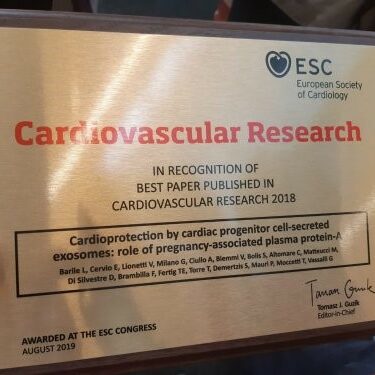
  • Cardioprotection by cardiac progenitor cell-secreted exosomes: role of pregnancy-associated plasma protein-A.
    Barile L, Cervio E, Lionetti V, Milano G, Ciullo A, Biemmi V, Bolis S, Altomare C, Matteucci M, Di Silvestre D, Brambilla F, Fertig TE, Torre T, Demertzis S, Mauri P, Moccetti T, Vassalli G. Cardiovasc Res (IF: 10.79; Q1). 2018 Jun 1;114(7):992-1005.

COMPLETE LIST OF PUBLICATION : ORCID

PATENTS
  • Device and method for producing and purifying exosomes
    WO US US20200283715A1 Lugano Technology Transfer (LTT) SA
    Priority 2026-03-30 • Filed 2025-12-28 • Published 2026-09-10
  • Process and apparatus for producing exosomes
    WO IT WO2020136516A1 Supsi (Scuola Universitaria Professionale Della Svizzera Italiana)
    Priority 2025-12-27 • Filed 2025-12-19 • Published 2026-07-02
FUNDINGS
  • 2021-10 to 2024-10 | Grant Swiss National Science Foundation – SINERGIA-SNF (Bern, Switzerland) GRANT_NUMBER: CRSII5_202302
    Targeting cellular senescence in physiological, pathological and iatrogenic conditions
  • 2021-06 fino a 2024-06 | Grant Fondazione Leonardo (Lugano, Switzerland) Exploring mechanism beyond susceptibility of senescent cardiomyocytes to SARS-CoV-2
  • 2020 fino a 2022 | Fondo di ricerca/Grant Schweizerische Herzstiftung (Bern, CH) FF20019
    Isolation of nanobodies selective for cardiac specific antigens are instrumental for clinical management of cardiovascular patients based on Extracellular Vesicles analysis (liquid biopsy)
  • 2020-11 to present | Grant European Commission FET-OPEN H2020 (Brussels, Belgium) GRANT_NUMBER: 951768
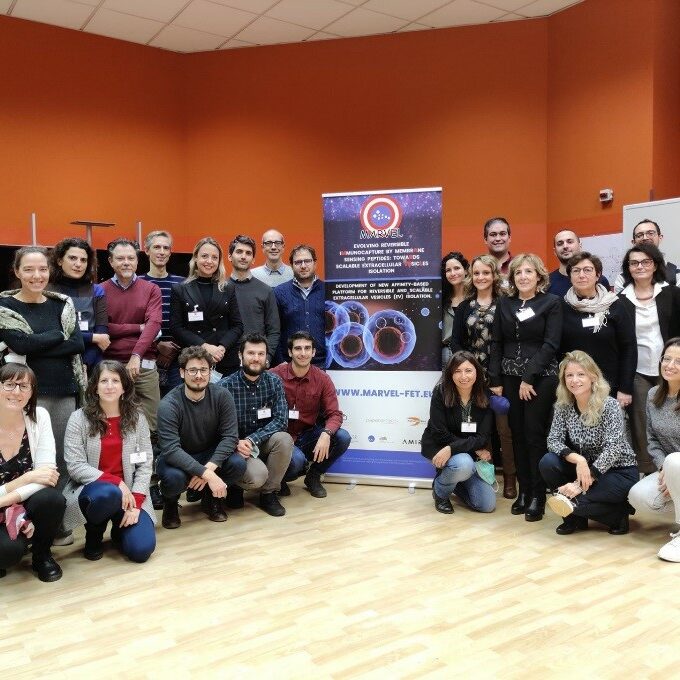
    MARVEL:Evolving reversible iMmunocapture by membrane sensing peptides: towARds scalable extracellular VEsicLes isolation
  • 2019-01 to 2022-01 | Grant Swiss National Science Foundation - SNF (Bern, Switzerland) GRANT_NUMBER: IZCOZ0_18294
    EXaCT: EXosomes based Combination Therapy to target multiple signaling within cardioprotective pathways
PHOTOGALLERY